

“Account-Based Everything” is not a thing.
This phrase needs to be debunked because it hurts both organizations with “Account-Based Everything” as their battle cry, as well as organizations simply seeking to give account-based marketing (ABM) a shot.
To give you an example of what I’m talking about, one well-meaning company makes a reasonable case for expanding ABM principles to cover sales and customer success efforts. Technically, this might be called “account-based customer experience management” (for which “ABCX” would be a sexy, buzz-worthy acronym). Calling it “everything,” though, is clearly an exaggeration, and possibly the result of an over-caffeinated brainstorm. Read: The CMO’s Agenda: Managing Marketing and Its Alignment with Sales
Applying an account-based approach to two closely related business functions does not an “everything” make.
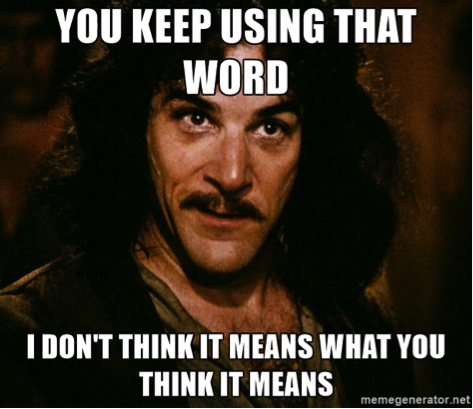
At least one analyst firm covering the expansion of ABM to other spheres has encouraged vendors to try to make a research-based case for Account-Based Everything. Nevertheless, in this case the messaging, too, invites a kind of Inigo Montoya reaction to the term “everything.”
ABM Defined
For clarity, Aberdeen Group defines account-based marketing according to a simple, five-D framework. True practitioners of ABM must:
- Define accounts by creating ideal customer profiles based on organizations that have purchased before or are most likely to purchase in the future.
- Derive focused insights pertaining to the relevant needs and problems that target accounts aim to address.
- Divide, contextualize, and conquer by segmenting similar accounts for similar, yet personalized, marketing campaigns or marketing/sales workflows.
- Drive account growth by establishing or solidifying a business relationship with one department or division of an account and then expanding that relationship to other sectors of the account.
- Distill repeatable or refreshable action items by measuring and reporting on effectiveness within specific accounts.
Aberdeen Group marketing research shows that, although Best-in-Class marketing organizations are 80% more likely to practice account-based marketing, only 35% of all organizations are true practitioners of this approach. This means that ABM isn’t even everywhere yet, let alone “everything,” even at the organizations doing it.
ABM Is Not About Being Trendy
Account-based marketing is a best practice of top performing companies, not because “everyone” is doing it, but because the specificity and relevance to buyers that it supports creates more compelling and more competitive interactions.
At the same time, ABM is more than just targeting named accounts. Anyone can do that, just like anyone can stand at home plate and point a bat at the spot where they’d like to hit a home run. To actually hit a called-shot home run, or to effectively execute an ABM strategy, takes skill, refinement, and the ability to adapt to whatever comes your way.
Seventy-three percent of Best-in-Class organizations, for example, employ relevant value propositions well-aligned to the business challenges of their buyers. Fewer than half (41%) of Laggard organizations do the same.
ABM is about knocking it out of the park account by account. Relevant messaging essentially puts the bat on the ball. Marketers who don’t get this are out of their league.
Set Realistic Expectations for ABM
Why is it so important to have realistic expectations for ABM? Back in 2016, our report Account-Based Marketing Fact and Fiction: What Really Works? showed that ABM adoption levels were actually slightly higher than what we see today (42% then vs. 35% now). This kind of dip is to be expected when expectations don’t jibe with reality. Marketers who jump on the ABM bandwagon thinking, “This will be an easy home run,” can quickly become disillusioned, especially when they start striking out on their named accounts.
ABM is not a strategy that miraculously transforms organizations; it’s a strategy that organizations must transform themselves to effectively execute.
If “Account-Based Everything” were a thing, that would mean having other business units or teams focused on specific accounts, which is kind of already a thing; it’s called an agency. At an agency, you have account managers overseeing deliverables, account executives cross-selling and up-selling, account directors overseeing strategy and quality of account-based operations, sometimes even account-based accountants who manage billing and revenue recognition for specific accounts.
I suppose, if you’re an agency, and you want to call your standard operating model “Account-Based Everything,” you could. But would it really be worth the two extra words and four extra syllables to say the same thing as “we have an agency model”?
Account-Based <Insert Business Function>
To finally put “Account-Based Everything” to rest, consider the idea of an “Account-Based Product.” Your products do fall under the umbrella of “everything,” so why not, right?
If you are a software provider, or any organization aiming to scale its offerings, would it really make sense to have account-based engineering teams to make different products for different accounts? I mean, sure, it would make sense to have some optional, account-based configurations, or account-based recommendations for product use. But, for each account or account type your organization pursues, imagine having separate, specialized products to manage and deliver.
The goal of account-based marketing is to be relevant and specialized in your messaging to specific accounts, even to the point of creating custom campaigns and experiences for those accounts. If a product or offering, on the other hand, is meant to cover most use-cases for most accounts, why have account-based wheel-reinvention to essentially deliver the same thing?
Why ABM Works
Account-based marketing is predicated on account-based specificity, relevance, and customization.
To take that level of specificity, which works very well in marketing, and extend it to other business operations, processes, strategies, and, well, “everything,” contradicts the fundamental principle of ABM.
Unfortunately, there’s no Rumpelstiltskinesque trick to make “Account-Based Everything” go away simply by naming its shortcomings. It is important to call them out nonetheless.
Account-based marketing is a serious, relevant approach to marketing that can deliver real results for organizations that practice it. “Account-Based Everything” means nothing, precisely because it is so ambiguous it could mean anything.
For marketers who are thinking about or currently pursuing ABM strategies, “Account-Based Everything” adds exactly nothing.
Image Source (Creative Commons): Joel Olives.
