INTENT
Insights into industry rumblings and the most up-to-date developments in technology and strategies surrounding buyer intent analytics.

Insights into industry rumblings and the most up-to-date developments in technology and strategies surrounding buyer intent analytics.
This week, Spiceworks Ziff Davis acquired Aberdeen. Here are five ways this partnership improves intent data for B2B customers.
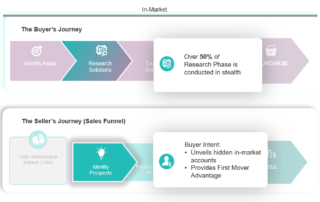
Are you aligning your seller and buyer journeys to develop tailored messaging and engage clients? Learn how you can with buyer intent data.
Although valuable, an aggregate view of data often misrepresents underlying dynamics. In part 2 of this series, we will examine some of the underlying dynamics that may be at play.
Behavioral Technographics can tell us which open source database management systems (OSDBMS) are the most popular among users, and what users are demanding.
A functional title does not equal a true decision maker. Building a taxonomy, not of titles, but of keywords and phrases people use to describe what they do, will bring back to you your true total addressable audience.
While Zoom may be leading the pack of video conferencing softwares during COVID-19, there are security risks that concern new users. Aberdeen Behavioral Technographic data shows us when and how many new users are continuing with the software or looking to switch.
COVID-19 has undoubtedly changed the way we work, bringing about a massive rise in the use of video conferencing software. But which of these leading softwares are garnering the most user traffic? Aberdeen Behavioral Technographic data can tell us.
To keep up with modern buyers, we must move beyond the MQL and look at other ways to determine how an account’s behavior can be the equivalent (or better) of what an MQL represents.
In marketing and sales, if everything was a nail and Intent data was a hammer, life would be so much easier and we could all go golfing or whatever your golf equivalent is. Unfortunately, using intent data and behavioral signals requires just a bit more data science and work to make it all come together nicely.
As marketers, we often make assumptions and misplace value on MQLs. Though useful, they can get in the way of a more evolved view of what an Opportunity truly looks like. How can we ensure that MQLs evolve to meet the modern buyers journey?